Rob van Doorn: “Publishing a book is a long and intensive process”
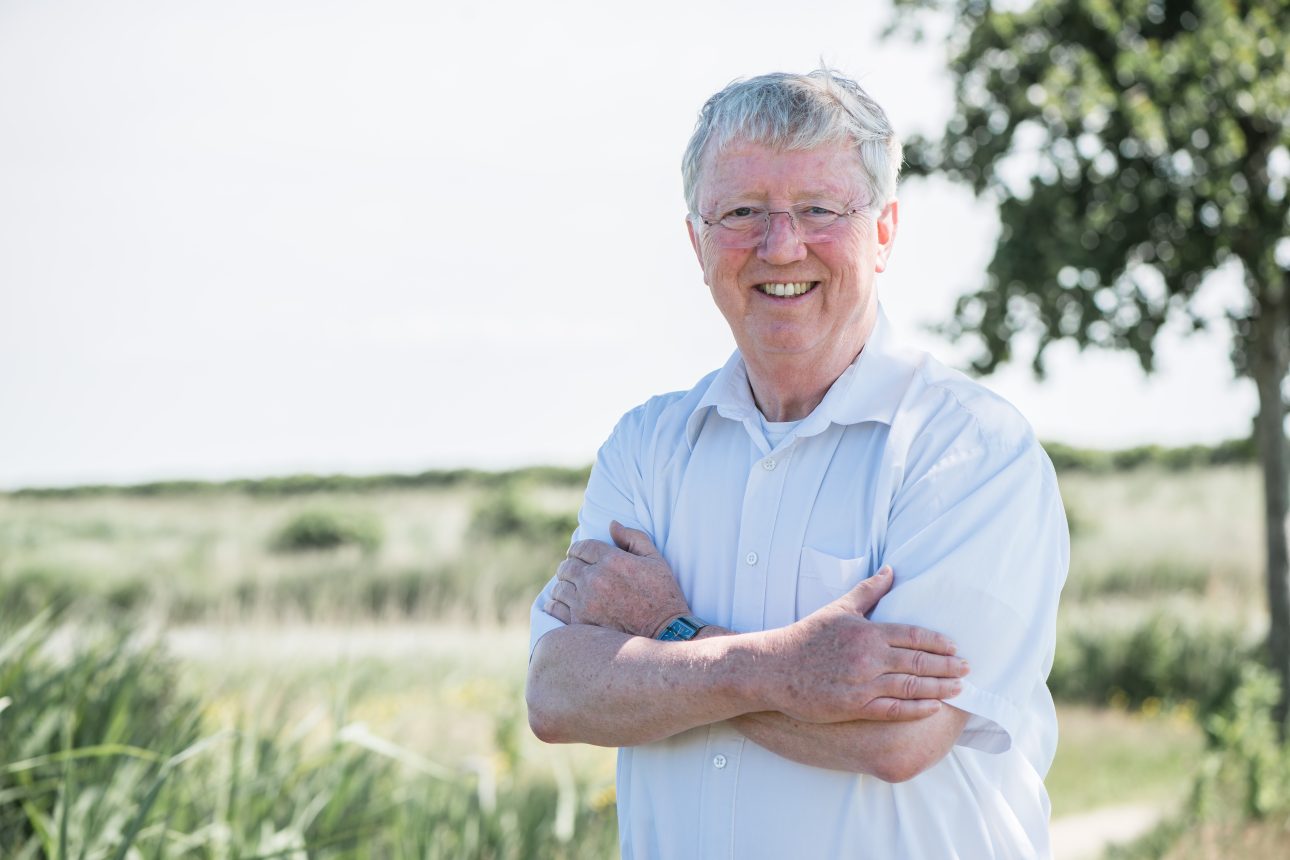
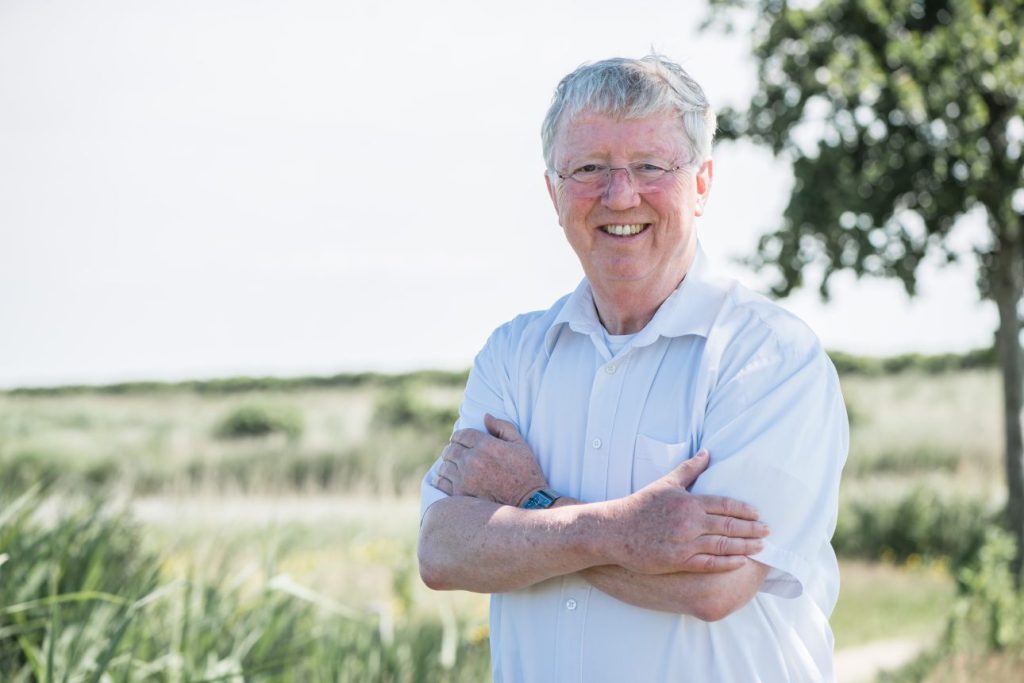
At Uitgeverij Doornwater, a Dutch publishing house, the introductory meeting carries at least as much weight as the manuscript. Rob van Doorn runs the publishing house together with Hanneke van de Water. He explains how a debut author wins him over and what authors help pay for out of their own pocket.
Your website says you give new authors a chance. How does a debut author win you over?
First of all, of course, a manuscript has to be a good fit for Uitgeverij Doornwater. We have two clear criteria for that: a manuscript has to be at least 60,000 words long, and it has to contain a socially or politically relevant theme. That doesn’t have to be a heavy nonfiction book at all, by the way. A theme like that can just as easily be wrapped in a thriller, a novel, or another genre.
But that alone doesn’t get you there, of course. In the end, it’s about the quality of the story. Is it well written? Are the characters believable? Does it have momentum? And maybe most important of all: after ten, twenty, or fifty pages, do we want to keep reading? So a debut author doesn’t have to win us over with an impressive résumé or earlier publications. The manuscript has to win us over.
A manuscript comes in. Who reads it, and what happens next?
We get quite a lot of manuscripts. We put them on a list, and as a rule we handle them in the order they come in. My business partner (Hanneke van de Water) and I divide them between us, and one of us starts reading.
When we started Uitgeverij Doornwater together, we agreed on one very clear rule: we only publish books we both wholeheartedly say yes to. It’s very simple. If the person who reads the manuscript first isn’t enthusiastic enough, it stops there, and the other one doesn’t have to read it all the way through. If the first one is enthusiastic, the manuscript goes to the other.
If we’re both enthusiastic after that, we invite the author for an introductory meeting. We consider that at least as important as the manuscript itself. Publishing a book is a long and intensive process. You work together on the editing, the cover, the flap copy, the author bio, the promotion, and much more. That takes trust on both sides, and you have to be able to work together well. A good book is important, but so is a good working relationship.
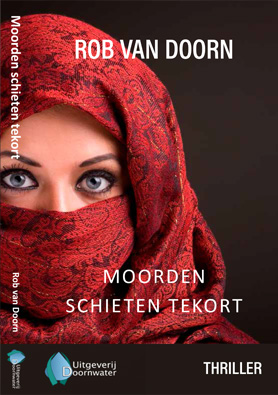
You decide to publish a manuscript. What happens then, and how long does it take before the book is on sale?
As soon as the contract is signed, we schedule the book, and that’s really the start of a very intensive but also fun period. The editing starts, work begins on the cover design, and we write the flap copy and the author bio.
What matters to us is that authors don’t feel they’re dropping off their manuscript at the front door and getting it back as a book months later. We really do it together. The author is involved in the different steps and is of course welcome to have an opinion on them.
When all three of us are satisfied, the material goes to the designer, who makes the proofs of the book. Those are checked again too, and only once everyone has signed off are the final print files made, and then the book goes to the printer.
How much time that takes varies from book to book. It depends on things like the amount of editing, the designer’s and the printer’s schedules, and of course our own publishing schedule. We’d rather do it carefully than as fast as possible.
What makes you lose interest while reading a submission?
Sometimes that becomes clear fairly quickly. For example, when a manuscript doesn’t meet our minimum length, or when the social or political element we’re looking for is missing.
But of course it can also happen while reading. An interesting theme alone isn’t enough; it also has to be developed well. The story has to stay gripping, the writing style has to be up to standard, and the characters have to be believable.
Beyond that, we look at whether a book fits what we want to stand for as a publisher. We certainly don’t shy away from controversial subjects or dissenting opinions (on the contrary, as far as we’re concerned a book is welcome to spark debate), but there are of course limits when the message or thrust is fundamentally at odds with the values we want to promote as a publisher and personally.
You also give less commercial books a chance. What does “less commercial” mean to you, and where do you draw the line?
For us, “less commercial” mainly means that a book can have a relatively small target audience. A book about a very specific social, historical, or political subject may never reach thousands of readers, but for a smaller group it can actually be enormously valuable.
That’s why we don’t only ask: how many copies can we sell of this? We also ask: does this book have something to say? Does it add something? Does this story deserve a platform?
Of course we’re also simply a business, and a publication has to make financial sense. So there certainly is a line somewhere. But for us, commercial potential isn’t the only criterion. If it were, quite a few remarkable books would never be published.
What happens to a manuscript that’s good but not finished yet?
As a rule, we only assess manuscripts whose authors themselves say: this is my completed manuscript. We’re not a writing school, and it isn’t our intention to develop a book together starting from a first draft.
That doesn’t mean we can’t think a manuscript is very good and at the same time think: there’s more to get out of this. Maybe a storyline needs to be stronger, a character could be developed further, or certain passages are unnecessary.
In a case like that, we talk it over with the author. We explain what we see and why we think a change would make the book better. In the end, of course, it remains the author’s work. So the author also has to be willing to listen to our arguments, and decide for himself or herself what to do with them.
What do you do for authors once the book is out, and what do you expect them to take on themselves?
Relatively speaking, we do quite a lot of book marketing. We see that many publishers these days have only limited time and money available for it. We’ve made a conscious choice to do it differently.
After all, you can publish a fantastic book, but if nobody knows it exists, nobody reads it either. That’s why we have an extensive range of marketing activities. We approach print outlets, digital news media, radio, and, where possible, television. As a result, our books and authors regularly appear in the media. On top of that, we’re very active on social media ourselves.
At the same time, we also expect something from our authors. A publisher can create visibility, but authors themselves are an important part of the story behind a book. That’s why we encourage authors to be visible themselves too, for example through social media, presentations, interviews, and events. In our experience, book promotion works best when publisher and author pull together.
What kind of manuscripts are you looking for right now, and why those in particular?
We’re actually always looking for manuscripts that take on a relevant social or political subject. That can be fiction or nonfiction.
We live in a time when an enormous amount is happening and public debates follow one another in rapid succession. Literature can help us look at subjects like that from a different angle. A novel or thriller can sometimes make something tangible that stays mostly abstract in a newspaper article.
Those are the books that get us excited: books that don’t just entertain, but that stay in your head after the last page, that get a debate going or perhaps even bring about change.
You write political thrillers yourself. Does that help when you read someone else’s manuscript, or does it actually get in the way?
It absolutely helps. Hanneke and I both write, and so we know how vulnerable it can feel to put something you’ve written yourself in front of someone else. You’ve worked on a manuscript for months or sometimes years, and then you’re sitting across the table from someone who has all kinds of opinions about it.
It also helps when we’re assessing a manuscript. As a writer, you recognize, for example, where a story sags, when information is explained too heavy-handedly, when dialogue doesn’t feel natural, or when a plot is actually very well put together.
At the same time, you have to be careful not to start telling another author how you would have written it yourself. That’s not the point. Every writer has their own voice. Our job is not to turn it into our voice, but to see how we can bring out the best in that author’s voice.
Before you went into publishing, you were an executive and an organizational consultant. What did you learn in that work that still helps you as a publisher?
Probably more than I’d expected beforehand. As an executive and organizational consultant, you learn first and foremost to listen well. Not only to what someone says, but also to what lies behind it. You learn to recognize different interests, to separate the essentials from the side issues, and to make decisions when not everyone automatically agrees.
That comes in handy all the time at a publishing house. An author has a particular vision of his book, an editor sees it yet another way, a designer has his own ideas, and we as the publisher have our responsibility too. In the end, all of that has to come together.
Beyond that, I’ve learned that clarity is enormously important. Say what you do and do what you say. Especially in a process that is often very personal and emotional for an author. For us, a manuscript is our work, but for an author it can be something they’ve put an enormous part of themselves into for years. You have to handle that with care.
What should writers expect financially if they publish with a small publisher?
That varies enormously from publisher to publisher, and that’s why I’d advise every author to look into it very carefully beforehand and, above all, to ask questions about it. What is expected of you, what does the publisher do in return, and what agreements are made about sales, royalties, marketing, and any other costs?
Smaller publishers have different models. With us, an author contributes financially to the production and promotion of a book. We’re completely transparent about how we arrive at that contribution and what the author gets back for it.
Above all, I think an author should know exactly where they stand beforehand. No surprises afterward, no unclear costs, and no rosy sales promises nobody can keep. Publishing a book is also a business partnership, and that calls for clear agreements.
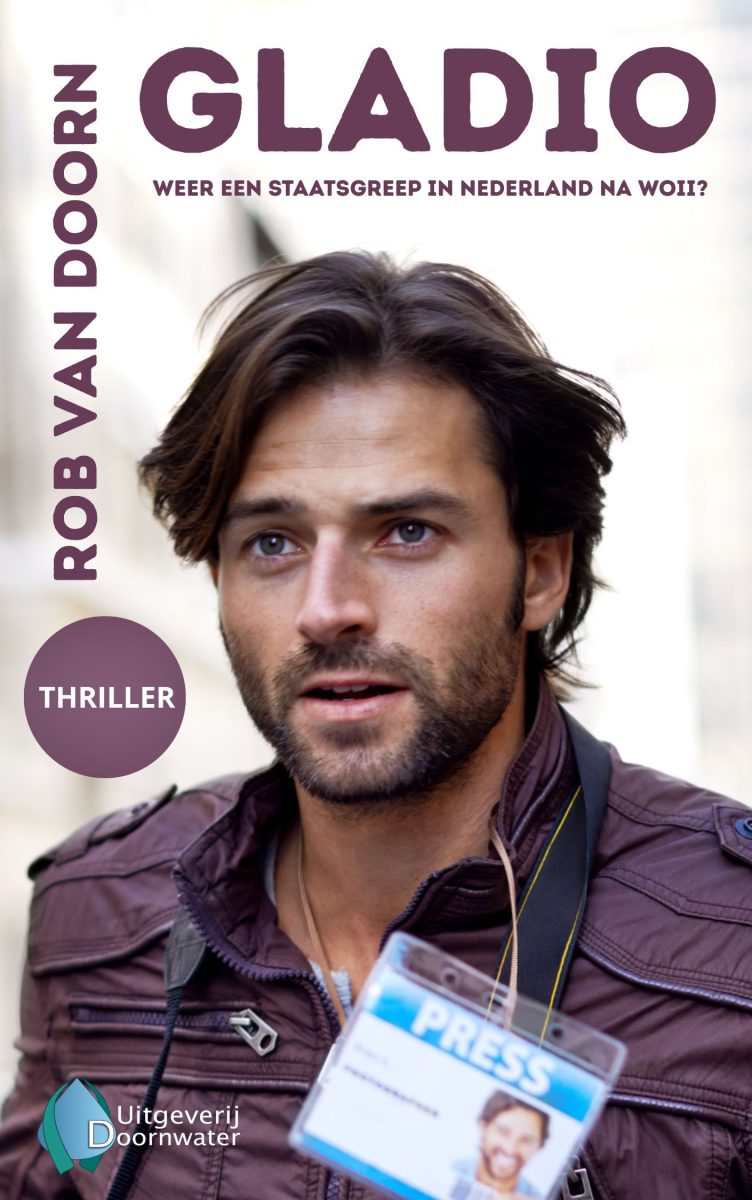
What do you say to someone who gets rejected everywhere?
Above all: don’t let it discourage you right away.
A rejection from a publisher doesn’t automatically mean a manuscript is bad. Publishers all have their own profile, list, taste, and commercial considerations. A book that doesn’t fit with us can be exactly the right fit at another publisher instead.
We try to make that clear in our rejections too. If a manuscript doesn’t fit our list, we say explicitly that our decision doesn’t automatically say anything about its quality.
But if, while reading, we do see that someone doesn’t have enough writing experience yet, for example, we may advise them to work with a writing coach first and develop the manuscript further.
And sometimes persevering is simply part of being a writer. There are plenty of successful authors who first got a pile of rejections. Listen to serious feedback, look critically at your own work, improve where needed, but don’t let one or more rejections decide whether your story has a right to exist.
What does an AI coach see in your writing?
Paste a passage of 300 to 900 words and read what works, what could be sharper, and what to tackle first. The coach quotes your own sentences and backs up every comment. It doesn't rewrite anything.
Your text is not used to train AI models. Privacy Policy
Want more coaching?
With a free account, your limit jumps to 20,000 characters per analysis, and every analysis comes with three deep-dive buttons tailored to your text.
Try another type of writing?
No credit card required.