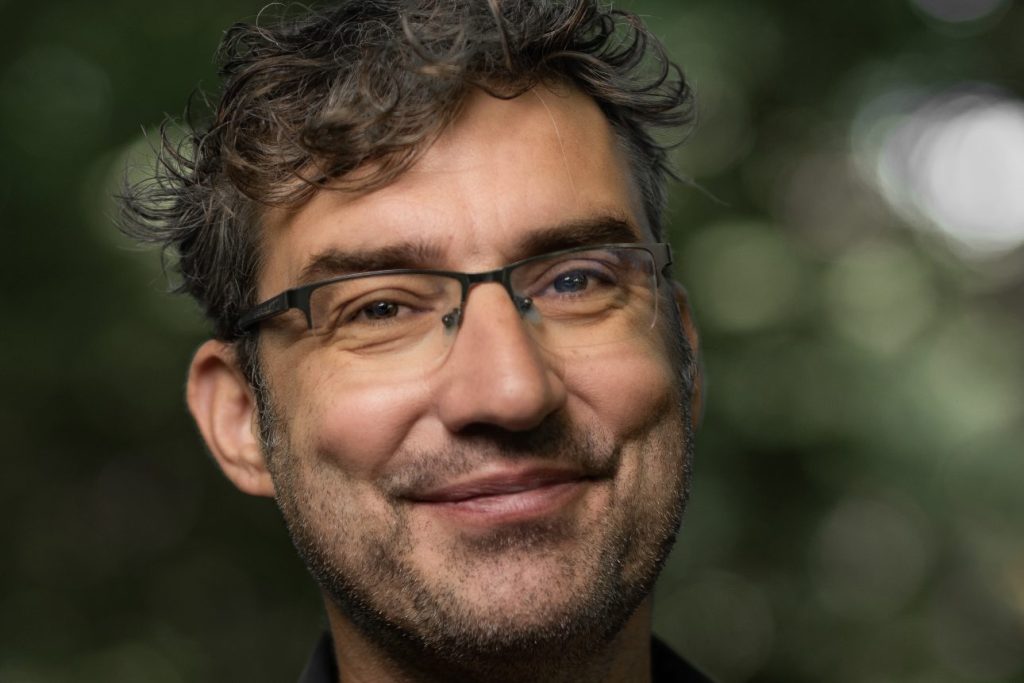
Patrick Bernauw: “Every good story is driven by its characters”
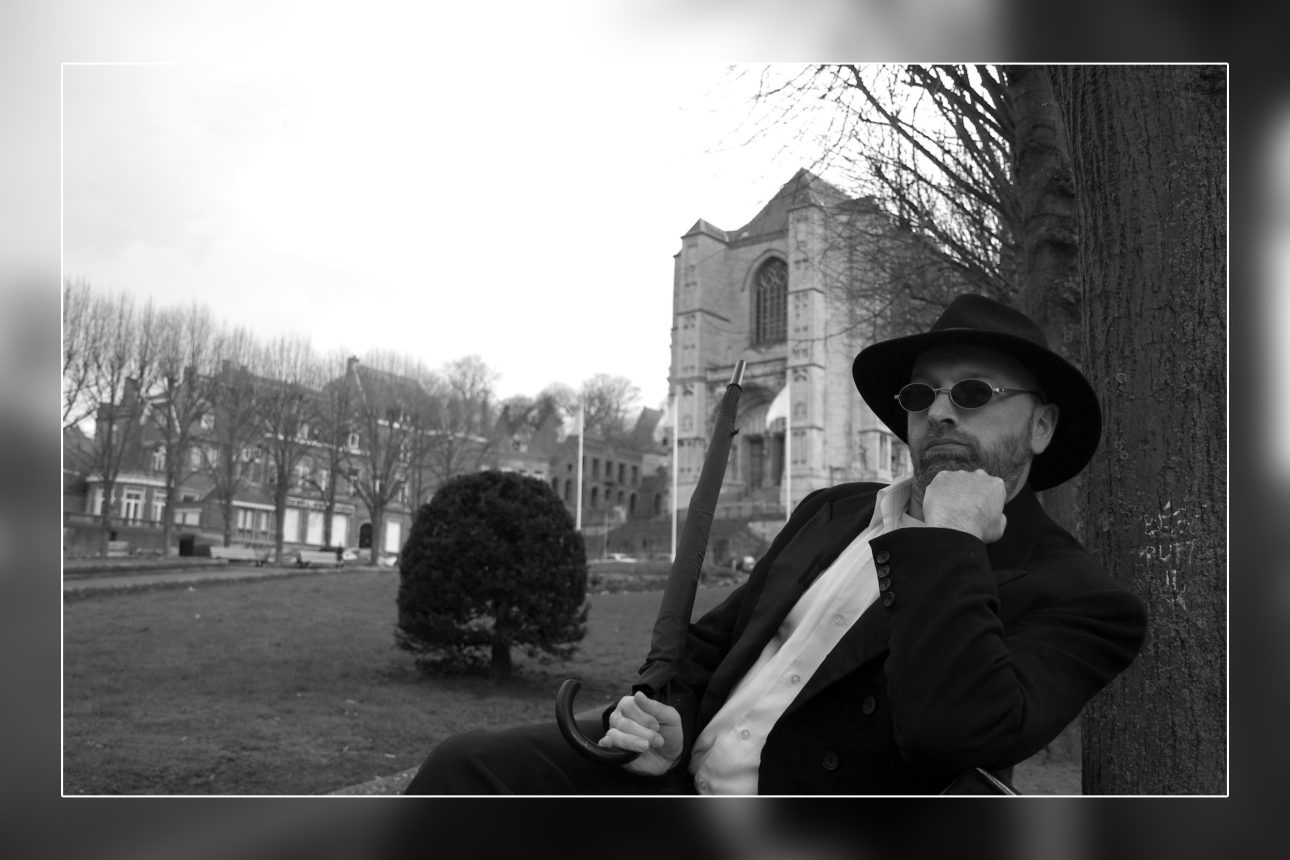
Patrick Bernauw writes first and foremost because he wants to amuse himself, not to reach the widest possible audience. He writes the books he’d like to read himself, and these days he also publishes them himself. In this interview, he talks about how writers get in their own way, how characters steer the story, and why the business model for writers is under pressure.
You taught writers for 21 years. Where did they get stuck most often?
I can think of two things that, at first glance, are complete opposites. The first, especially for longer work (fiction as well as nonfiction), is structure. For a lot of people, writing means “writing from the gut”: following the inspiration of the moment, starting somewhere, and seeing where you end up.
There are no doubt some very talented authors for whom that works, but I’m afraid that, on closer inspection, there aren’t many of them, and that as a beginner you’re better off giving yourself a bit more to hold on to. A well-told story simply follows the rules of the craft, in three acts: setup, development, resolution.
And that has its consequences. Some writers already tell stories that way without realizing it, but once they become aware of the mechanism, they can use it better, too.
The second is that, as a reader (and mentor), I have no interest in your agenda as a writer. I don’t want to hear what you, as a writer, want to achieve. I want to hear what your characters want to achieve.
Every good story is driven by its characters, and so by their agenda, not the writer’s. As a writer, you have to follow your characters, not the other way around.
A good Three-Act Structure lays down anchor points. But how your characters develop, from the inciting incident to the dramatic climax, is something they need to be able to decide, to a large extent, for themselves.
On your website, you say you guide authors toward their second draft. What changes between the first draft and the second?
That varies from author to author and from story to story, again in fiction as well as nonfiction. How do we make the best possible book out of this, in terms of content, structure, form, and style?
Those are the four areas that shape every story. And often it takes more than one extra draft, by the way. It all depends on how far along the author already is in the writing process.
Authors themselves have their noses too close to the whole thing, and as anyone can test for themselves, you miss an awful lot when you hold your hand right in front of your nose. An editor or a writing coach helps you step back from your text and start reading it, not through the eyes of its writer, but through the eyes of a reader.
They’re your sounding board, they look for possibilities together with you, they broaden your view. Maybe it’s mainly the content that still needs work, maybe the structure isn’t quite right, maybe the structure and content don’t fit the form you’re writing in (the point of view doesn’t sit right, for example), or maybe what’s left is mostly a question of style. It all depends on the particular text you’re working with.

What can’t writers see in their own work, even after reading it ten times?
Here, too, I have to say: it varies from author to author. And as a writing mentor, you also have to be careful not to tinker too much with the very thing that makes a writer unique, just to reduce them to some kind of common denominator.
And certainly not to make them conform to your own taste. But every writer has their blind spots, in matters of style (crutch words, overlong digressions, underestimating the reader, repetition that serves no purpose…) and in content or structure, where as a writer you sometimes take the easy way out.
The kind of thing where they think: “I’ll get away with that. Nobody will notice.” Your job as an editor, teacher, writing coach is to notice exactly those things.
Every year, a yearbook comes out with the best work from your classes. How can you tell when something is good enough?
That used to be the case, yes. When is something good enough? When I get the feeling: this is the best possible version of the story or poem that was in there. The writer’s own unique voice comes through in it as fully as it can. Everything has been written before, but not in this way.
This story has “something to say” (it’s about something), it’s well structured, and it’s all there in beautiful Dutch. If you’ve been working with a writer for a while and you’re handed a text by him or her without a name on it, you should have no trouble putting a name to it.
Maybe the text is too idiosyncratic for everyone to think it’s great, but if you think there are enough people who could enjoy it, then it’s fine by me.
Here again: as a teacher, writing coach, or editor, you have to be able to get past your own preferences and set aside what you’d like to read yourself. I’m not a big fantasy fan myself, but I still have to be able to recognize a good fantasy story.
When does feedback still really help someone, and at what point does it stop changing anything?
Yes, I’d have to give you roughly the same answer as for the previous question. Content and structure come first. Sometimes they’re already in the best possible shape, sometimes that turns out not to be the case.
Usually the last phase is stylistic polishing, until the story or poem shines as brightly as it can. A good rule of thumb: if with every change I have to admit that nothing is being gained anymore, or even that we’re just treading water, then you’re better off leaving it alone.
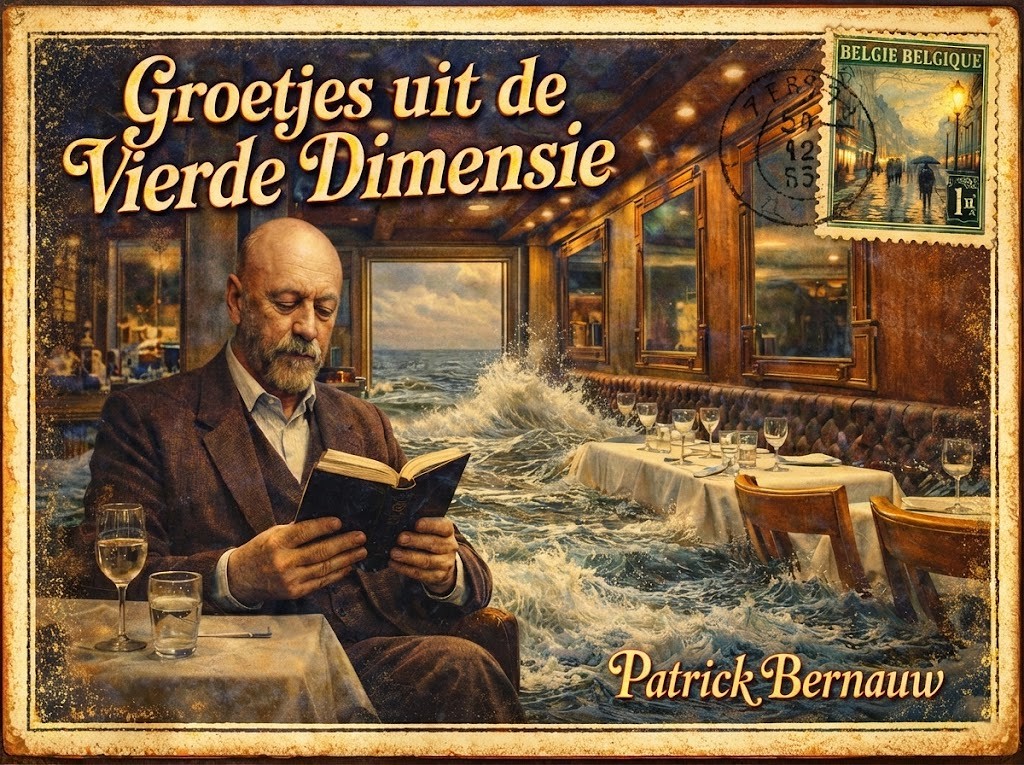
You’ve written prose, plays, radio plays, and screenplays. What has one form taught you about the others?
In poetry, the poet has complete freedom. In prose, the writer can still behave like an almighty Creator, as long as they follow the basic rules of storytelling.
That’s not true of theater, radio plays, or a screenplay for film or television. There you have to conceive your story entirely (or, if you’ve already written it as prose, completely “rethink” it) in terms of what I like to call “the people and the resources.”
What works perfectly well in a book won’t work on a stage, not unless you completely rethink it for that stage. The same goes for a radio play, where you have to bring a character and a world to life through sound.
If you can find the “way in” that lets you tell your story with these particular people and resources, you can make some really beautiful things, but you’ll never be able to do it alone. You need a director, a dramaturg, an editor, actors, and so on.
Personally, I’m pretty fond of addressing the reader directly in a book. In a radio play you can do that even more directly, and stir the listener’s imagination just as strongly as in a book. A novelist makes sure readers end up watching the movie of the whole story in their own heads.
As a radio playwright, you can practically crawl inside the listener’s head, and the result is the same: the listener helps create, in their own head, the movie you’re conjuring up. And then the possibilities are endless. You can make planes crash, climb into a submarine, you name it.
On the stage, you create an illusion, and to begin with, you have to decide whether that fourth wall is there or not. Theater has nothing to do with reality. It’s a game, and everyone in the audience knows it: they’re in on it. And in film, the viewer’s imagination is switched off completely, but as a screenwriter you’re just a small cog in a big machine.
Every discipline has its own possibilities and impossibilities. I’ve always found it particularly interesting to look for the “way in” that let me turn a story meant to be read into one meant to be heard, or into a story that could be performed on a stage.
If you write for film or television drama, you’ll inevitably have to deal with quite a few parties who have a say in your script, and it becomes very hard, if not impossible, to put your own personal stamp on it.
On your website, you quote someone who says you can learn to write, if you have talent to begin with. How do you see that after 21 years of teaching?
I still stand by that. Talent is a sine qua non. If you have talent, a course or a workshop can speed up the learning process.
But in the end, writing is of course mostly a matter of trial and error, of starting from scratch again and again, with a blank page, even if you already have thousands of pages under your belt.
And if you want to get anywhere with your writing, you’ll also need plenty of ambition, perseverance, flexibility, and a good dose of luck. Since I made my debut in the eighties, it certainly hasn’t gotten any easier to make a living as a writer.
“Show, don’t tell” is pretty much the best-known writing advice there is. Which piece of advice do you think is misunderstood most often?
That it isn’t supposed to be you, the writer, who tells the story, but your characters. Just look at the question!
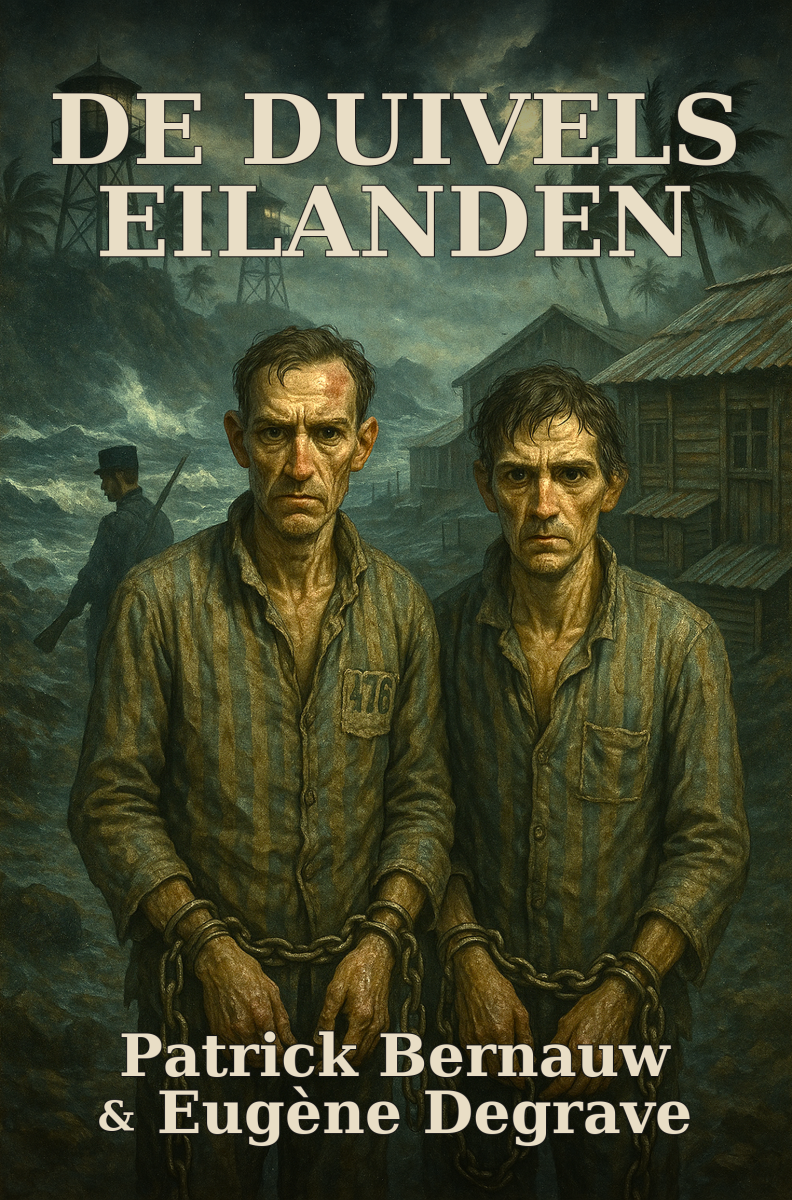
De Rechtvaardige Rechters (The Just Judges) has been in print continuously since 1992. What does that book have that many other books lose after a few years?
That’s an easy one. In Flanders, the 1934 theft of the Rechtvaardige Rechters panel (the Just Judges) from the Sint-Baafskathedraal in Gent is more or less our local version of the Loch Ness Monster.
It’s an exciting story in its own right, and the mystery still hasn’t been solved. Every new theory or new search that makes the news stirs up interest all over again, and that book comes back into the picture, too.
Your books came out with the Flemish publishers Davidsfonds and Manteau, and now you self-publish. What did a publisher’s editor do with your text that you now have to do yourself? And do you miss that?
I miss the sounding board. Someone who points out my blind spots and punctures my illusion that I’ll “get away with this.” Someone who tells me that this time I really am taking my artistic idiosyncrasies a bit too far, and that I might lose the reader that way.
But anyway, I’ve never found that a big problem. I’ve always written the books I’d like to read myself, not the kind of books written for the widest possible audience.
I run away screaming from the Dan Browns of the world, who know perfectly well how to tell a story, but do it fast-food style, with characters made of cardboard.
If a story I’ve written manages to find “my” audience, people who appreciate “my” kind of books, and that audience isn’t very big, I don’t mind at all. I write first and foremost because I want to amuse myself.
What has changed over those 21 years in what writers need?
I’d go back a little further still, and then I end up in the days when publishers still truly believed in writers’ careers and dared to invest in them, and when the market for books was big enough that you could build a professional career on it.
The “business model” of everything you can write these days (prose, theater, screenplays for film or television) is coming under pressure on all fronts. Libraries buy fewer books, books spend less and less time in stores (and even have a hard time getting into stores at all), and they get less and less attention in the media.
Up until thirty years ago, you could write radio plays for the big broadcasters and get paid well for it. Now you can easily make them yourself as a podcast, but you have to go looking for grants or sponsorship, or settle for a pittance from running ads.
Sure, you might have 5,000 listeners for an episode, but the ad spots that get added to it automatically will buy you one cup of coffee at a café, tops.
Back then, we produced our own plays and performed them dozens of times, not only in cultural centers but also in schools and libraries… These days that’s become just about impossible.
In those years, we won public lending rights, and standard contracts… but really, the whole system is under pressure. For writers, the “midlist” that used to exist (authors who sold a few thousand copies of every title) has all but disappeared. It’s either bestsellers or people working on the margins.
You were an early adopter of e-books, print on demand, and podcasts. What do you use for the writing itself, and where do you draw the line?
Oh, I’m a curious person, I love experimenting, with new media too… But for the writing itself, no… Writing by hand doesn’t really work for me. I was one of the first writers to buy an actual word processor, back in the eighties (a Schneider Joyce!), and today I still write every day, straight onto my laptop.
I don’t use any special programs for it, although I will bring in AI now and then for research (always check and double-check!), for making summaries, or as a sparring partner.
What does an AI coach see in your writing?
Paste a passage of 300 to 900 words and read what works, what could be sharper, and what to tackle first. The coach quotes your own sentences and backs up every comment. It doesn't rewrite anything.
Your text is not used to train AI models. Privacy Policy
Want more coaching?
With a free account, your limit jumps to 20,000 characters per analysis, and every analysis comes with three deep-dive buttons tailored to your text.
Try another type of writing?
No credit card required.